


Jason Rivait
Founding Partner

Graeme MacPherson
Condo Lawyer
No one wants to be handed a claim. Whether it is a slip and fall action, a dispute over repair obligations, a contract issue, or an owner complaint that has escalated into litigation, the first few steps matter and time is of the essence.
A delayed or disorganized response can create unnecessary risk for the corporation.
To avoid this, and the stress that comes from it, we put together this checklist of steps that managers (or anyone on behalf of the corporation) should take when served with a claim.
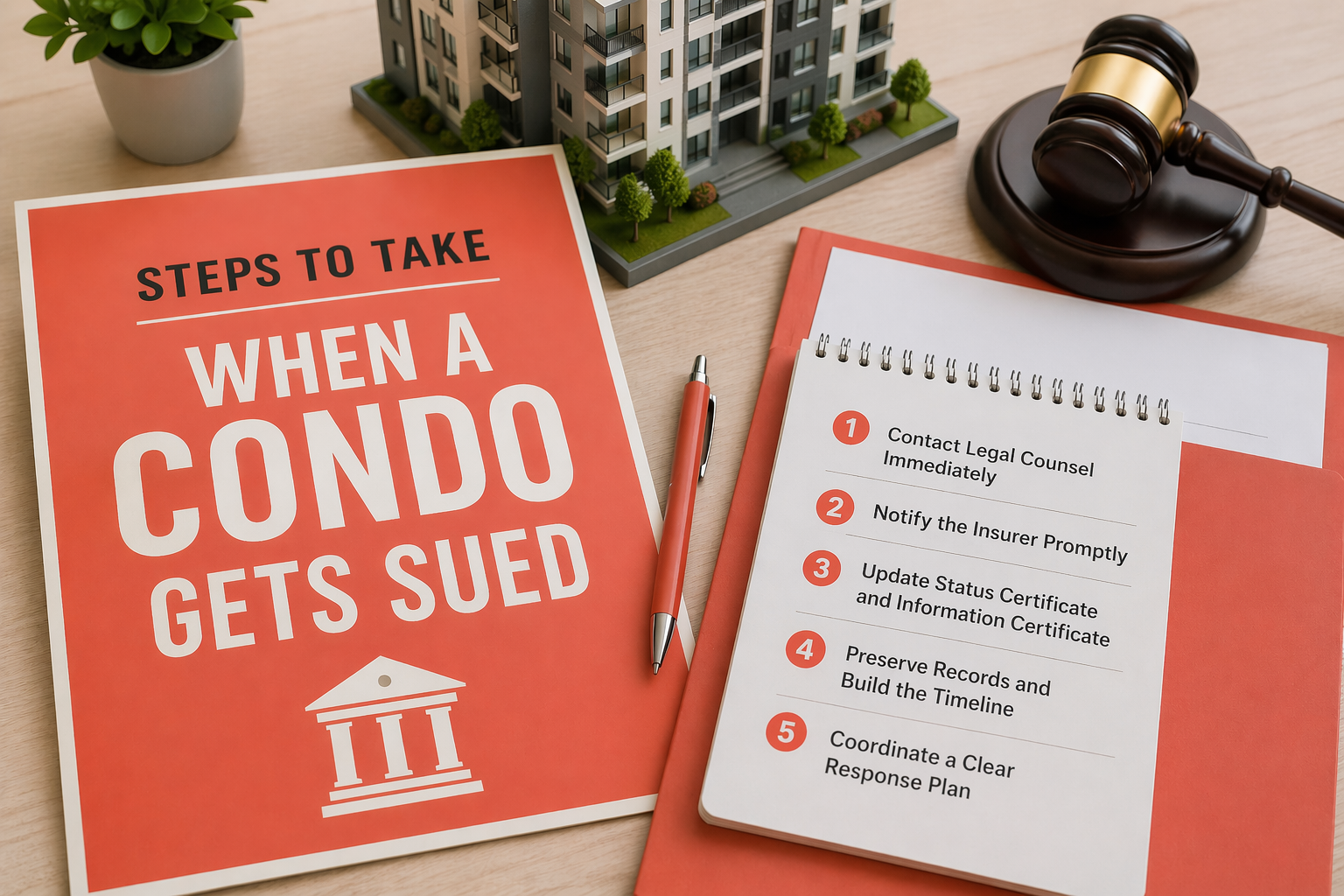
1. Contact Legal Counsel Immediately
While this one may seem obvious, it is the as soon as possible part we want to emphasize here. In Ontario, most claims must be defended within 20 days after having been served. Depending on the complexity of the matter, putting together a defence may take some time.
There are steps that lawyers can take to lengthen how long we have to defend. For instance, counsel can reach an agreement with the other side to extend the deadline for two weeks or two months or file a “notice of intent to defend” which buys 10 more days.
However, it is much smoother to do so if counsel have adequate runway. It is not ideal for anyone if the process is rushed.
The practical takeaway is straightforward:
Do not let the claim sit in an inbox or on your desk.
It is easy to receive a claim and plan to send it to counsel later, but as we all know, days in condo land have a funny way of slipping away. Next thing you know there is a water leak and an urgent elevator malfunction, and then suddenly you may arrive at next Thursday and realize that the claim has not been sent to counsel yet…. worse: it may slip your mind, buried at the bottom of your inbox.
Take it off your plate and put it on your lawyer’s. As soon as management receives the claim, counsel should be notified promptly. Missing the deadline can expose the corporation to entirely avoidable default proceedings.
2. Notify the Insurer Promptly
The next step, which frankly could run parallel to step 1 above, is to review the claim with the corporation’s insurer. Management should determine whether the allegations potentially engage the corporation’s insurance coverage and whether the matter should be formally reported.
This is not just about whether there may ultimately be indemnity. It is also about whether the insurer may wish to appoint counsel, whether defence costs may be covered, and whether there are notice requirements under the policy that need to be respected. Even where coverage is uncertain, prompt reporting is usually the safer course.
From a risk-management standpoint, this step should happen early and be documented carefully. Delay can complicate coverage discussions and create avoidable issues later.
3. Update Status Certificate and Information Certificate
Once a claim is received, the status certificate will need to be updated. Counsel can often help with this language to ensure it is compliant.
While you are at it, you may as well update the Periodic Information Certificate form as well for when it next goes out.
As an aside, as time goes by, this step will need to be revisited, because as the claim progresses, the information to be disclosed in these documents may also change.
4. Preserve Records and Build the Timeline
One of the most important things a condo manager can do at the outset is preserve the record. Often evidence collection is one of the most expensive and time-consuming parts of litigation.
Collecting and organizing documents while the matter is fresh and in your mind is key to cutting this cost.
That means gathering and safeguarding the documents and information that may be relevant to the claim, including incident reports, emails, photographs, video footage, contracts, work orders, correspondence, board minutes, maintenance logs, and prior complaints. It really depends on the nature of the case.
This is also the time to prepare a concise internal chronology. What happened? When? Who was involved? Was a contractor on site? Were there prior complaints? Has the issue been reported before? A clean factual package will save significant time and cost once the file is with counsel and/or the insurer.
5. Coordinate a Clear Response Plan
After the immediate steps are taken, management should help create a clear response structure.
- Who is the main contact with counsel?
- Who is gathering records?
- Are there related operational issues that need to be addressed in the meantime?
It may be that in the circumstances, it is more appropriate and useful for a board member to take on some of these roles, but that should be established early.
Establishing roles early will help to avoid duplication, confusion, and things being missed.
Final Thoughts
Being served with a claim does not necessarily mean the corporation has liability, but it does mean the clock is running.
For condo managers, at the risk of being obvious, the best immediate response is a practical one: send it to counsel, do not let it sit.