
The Condominium Authority Tribunal is introducing updated Rules of Practice and a new online platform on October 1, 2026. Levon has blogged about this already.
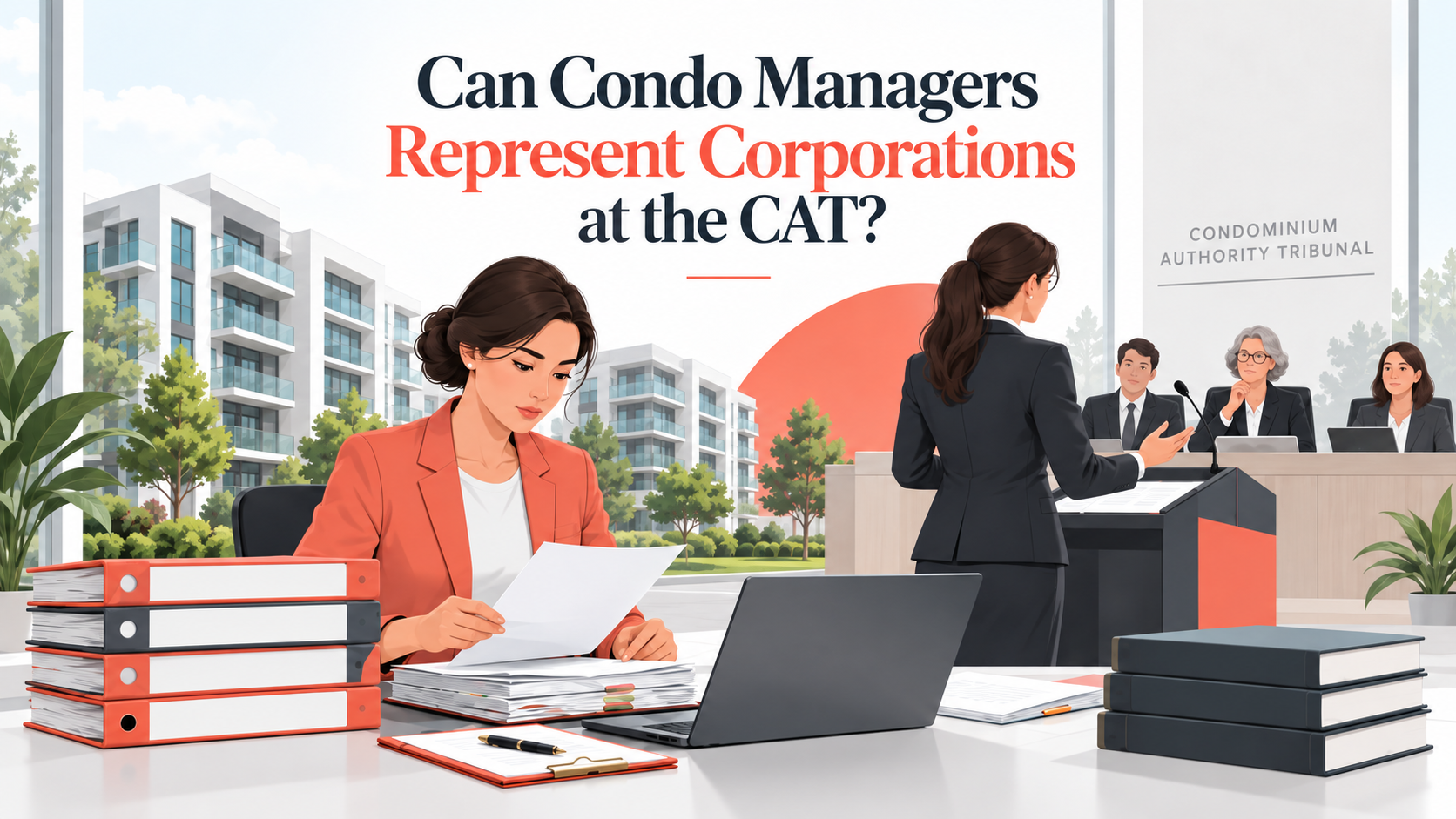
In this blog, we are focusing on the rules that clarify who may represent a party before the CAT and, importantly, the role condominium managers may play in a proceeding.
The changes should provide welcome relief to managers who have increasingly been expected to perform work that is legal, rather than managerial, in nature.
Who may act as a representative?
Under the updated rules, a party may be represented by:
- A lawyer licensed by the Law Society of Ontario;
- A licensed paralegal; or
- A person who is exempt from the Law Society’s licensing requirements.
The CAT may require evidence that the corporation has a quorum of directors and that its board authorized the person appearing for it.
Representatives must have enough information and instructions to participate effectively. They must also have authority to enter into settlement agreements and consent orders on behalf of the party they represent.
The updated CAT Rules of Practice apply to cases filed on or after October 1, 2026. Existing cases will remain on the legacy platform and continue under the rules that applied when they were commenced.
What does this mean for condominium managers?
The CMRAO has issued guidance confirming that condominium managers may support their condominium corporation in a CAT matter, but must not act as its representative. In particular, a manager should not make legal submissions, advance legal arguments or interpret the corporation’s legal rights.
A manager does not become entitled to provide legal services simply because the dispute relates to a condominium they manage or because the board authorizes them to appear.
Managers may still play an important supporting role by:
- Collecting records, correspondence and incident reports;
- Preparing factual chronologies;
- Coordinating witnesses and instructions;
- Giving evidence about matters within their personal knowledge; and
- Assisting the corporation in implementing a settlement or order.
The dividing line is advocacy. Once a manager begins determining litigation strategy, interpreting legislation or governing documents, making submissions or negotiating legal rights, the manager risks moving beyond condominium management into legal representation.
Bottom line?
Before commencing or responding to a CAT case, boards should pass a clear resolution authorizing the proceeding and identifying the corporation’s representative. Corporations should also decide who has settlement authority and document that authority.
Management agreements and internal protocols should distinguish between administrative assistance and legal representation. Managers should support the factual and operational aspects of a case, while advocacy and legal strategy are handled by a qualified legal representative.
The result should be clearer accountability and fewer managers unexpectedly finding themselves cast as condominium litigators.