
The Court of Appeal Brings Welcome Clarity
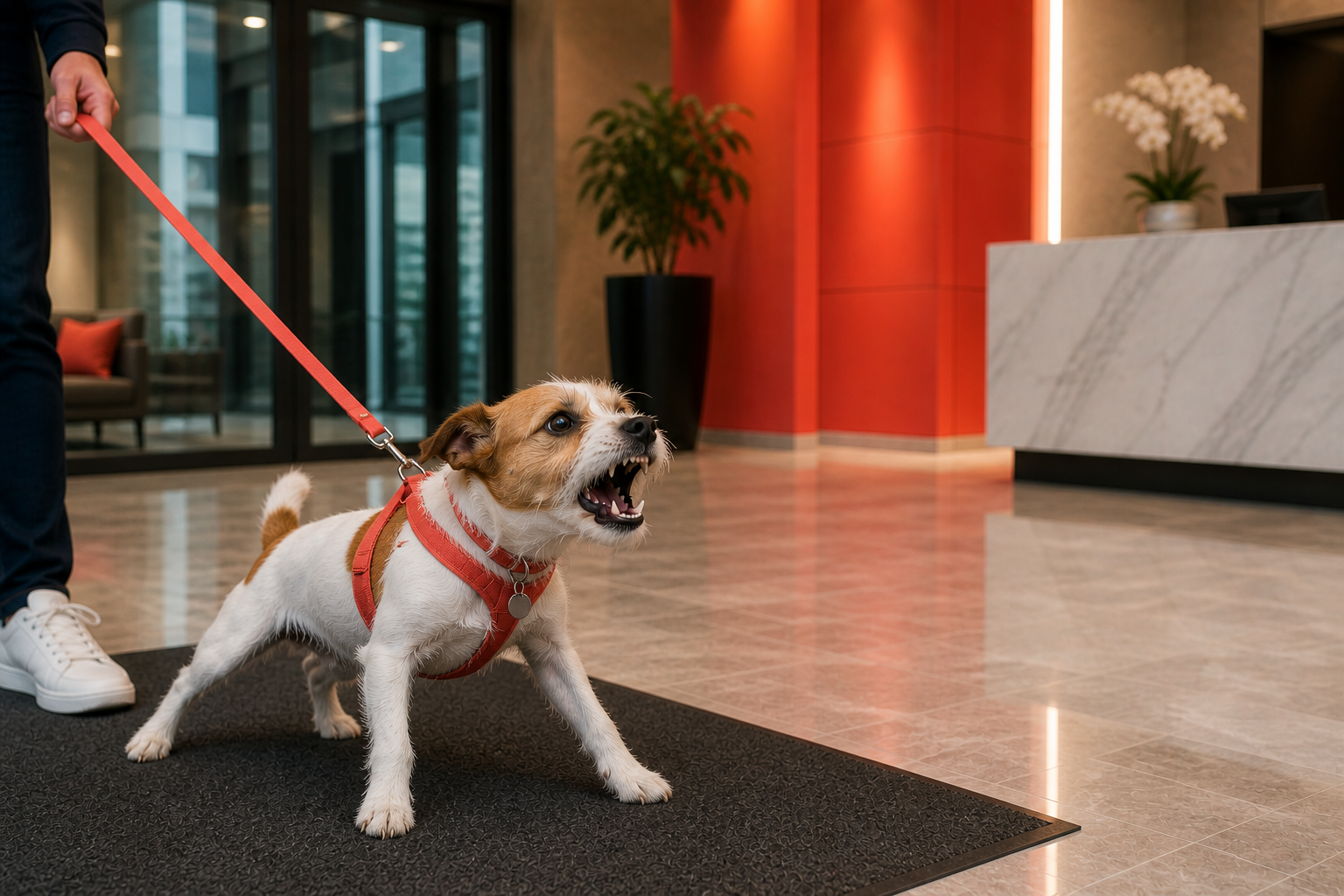
Dog attacks on condo common elements, such as hallways, elevators, and lobbies, raise a recurring and uncomfortable question. When something goes wrong, is the condo corporation on the hook?
A recent decision from the Ontario Court of Appeal brings much-needed clarity and a sigh of relief.
Responsibility Follows the Dog, not the building
Ontario’s Dog Owners’ Liability Act (DOLA) imposes strict liability on dog owners. In simple terms, if a dog bites or attacks someone, the owner is responsible, even if they were careful and even if the dog had never shown any prior signs of aggression.
Importantly however, the Act defines “owner” very broadly, including not only the person who owns the dog, but also:
“a person who possesses or harbours the dog.”
The DOLA also expressly provides that where there is more than one “owner”, they are jointly and severally liable.
That expanded definition has led some plaintiffs to argue that condo corporations should assume some liability when attacks occur on common elements as they are the entity that controls the common element. In doing so, they relied on the Occupiers Liability Act, which requires the occupier (in this case the condo) to take reasonable steps to ensure the reasonable safety of those entering the premises.
That argument has now been significantly narrowed.
court of Appeal's decision
In a recent case, the Ontario Court of Appeal made it clear that liability for dog attacks is not about who controls the building. It is about who controls the dog.
The court highlighted that the DOLA directly addresses how this regime interacts with The Occupiers Liability Act. Indeed, section 3(1) provides:
Application of Occupiers’ Liability Act
3 (1) Where damage is caused by being bitten or attacked by a dog on the premises of the owner, the liability of the owner is determined under this Act and not under the Occupiers’ Liability Act.
Based on this, the Court wrote at paragraph 21:
Lest there be any doubt, the DOLA expressly ousts application of the Occupiers’ Liability Act […] in relation to the liability of the owner, when the dog bite occurs on the premises of the owner. This reflects a policy choice to base liability on something other than ownership or possession of the building in which the incident occurred. The DOLA seeks to promote responsibility and accountability in those who are best able to prevent dog bites and attacks, wherever they occur. It would defeat this legislative objective if someone meeting the definition of owner could escape liability merely because they were in someone else’s home at the time of the incident.
To be clear, this case had nothing to do with condos. This case dealt with a dog walker who got bit by the dog she was caring for. She, not the actual dog owner, was found to have been the dog’s “owner” (as defined by DOLA) at the time of the attack even though the attack took place at the (real) owner’s home.
Still, this decision is likely applicable to condos. It confirms that the statute is designed to place responsibility squarely on those who control the dog, not those who control the premises.
Where Does Occupiers’ Liability Fit In?
Condo corporations are still considered occupiers under the Occupiers’ Liability Act, and they do have a general duty to take reasonable steps to keep common areas safe.
However, the Court of Appeal confirmed that when it comes to dog bites and attacks, the DOLA takes precedence. That said, the decision does not give condo corporations a free pass.
A corporation can still be liable if it is independently negligent. The focus shifts from ownership of the space to the corporation’s conduct. The key question becomes whether it acted reasonably in the face of a known risk.
The door is still open to liability where a corporation knew, or ought to have known, that a particular dog posed a danger and failed to take appropriate steps. This could arise where a board allows a dog with known aggressive tendencies to remain, fails to enforce leash or muzzle requirements, or ignores repeated complaints or prior incidents.
In those situations, liability does not flow from the dog itself, but from the corporation’s inaction.
What This Means in Practice
For boards and managers, this is a welcome clarification, but not a reason to be complacent. Indeed, ignoring repeat offenders may come back to bite you…
A few practical habits go a long way:
- take complaints seriously and investigate them promptly
- enforce pet-related rules consistently
- document incidents and steps taken in response
It is a balanced approach, one that places responsibility where it most often belongs, while still expecting condominium corporations to act reasonably when safety concerns arise.